WORKSHOP
EKPHRASIS, ENDLESS
Lecturer: Dominic Symes
Mondays 6–8pm, 15 June – 13 July 2026, Multipurpose Room 2, Kathleen Syme Library, Carlton, Melbourne (in-person only, recordings uploaded each week)
About 10 years ago I found myself momentarily happy, which filled me with a deep fear that my life as a poet was over. Luckily, I found writing about works of art that I liked (or didn’t like) as a sustainable way to stay creatively active without manifesting relationship tumult for the sake of poetry.
Because I think poetry is supposed to be fun and—ultimately—about being in the flow of ‘making’, I want to use the course as an opportunity to workshop ways of writing lots of poetry without thinking too hard about it. I want to lower the barrier for entry into a poem and let works of art spark ideas for poems that we might not have considered otherwise and let ekphasis (as an idea, as a metaphor, as a theory) reshape the way we relate to creative artefacts as poets.
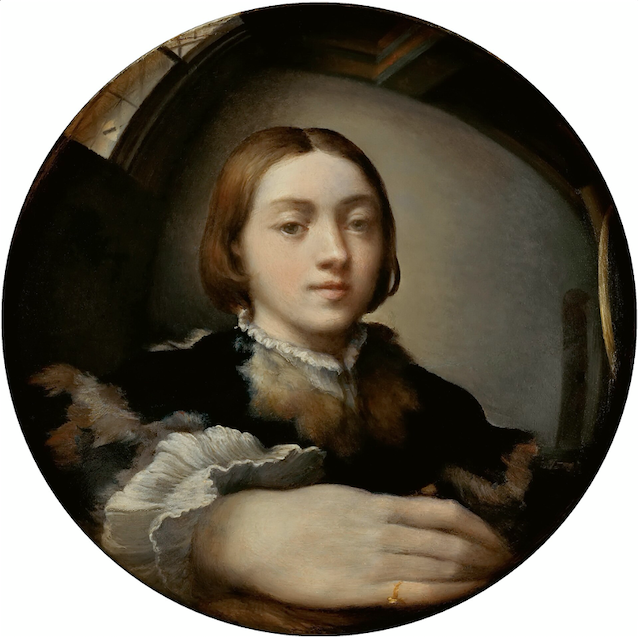
To do this, we will look through the history of writing poems about paintings (‘ekphrasis’) and how this has reflected the art and writing of the time. We will use Gregory Pardlo’s ‘nodes’ to develop a taxonomy for different approaches to ekphrastic writing. With this foundation we will start to play, looking at poetry written in response to other creative works (tv shows, movies, albums, buildings, memes, etc.). Using Karen Sullivan’s theory of ‘conceptual blending’ we will consider what it means to write ‘after’ a creative work and how we can invite the reader into a poem. Ultimately, we will see how far we can stretch ekphrasis.
The 5-week workshop will involve close reading poems, collaboratively establishing definitions of key terms/ideas and taking frequent opportunities to free-write in response to prompts, so as to creatively implement (play with) new forms. There is no expectation that you complete any poems during the course or share any of your work. In fact, I would be happiest if you left the course feeling confused but emboldened – stupidly confident, even – with new ideas for poems that you are yet to write.
SEMINAR
DECORATION
Lecturer: Angela Hesson
Tuesdays 6–8pm, 16 June – 14 July 2026, Multipurpose Room 2, Kathleen Syme Library, Carlton, Melbourne (in-person only, recordings uploaded each week)
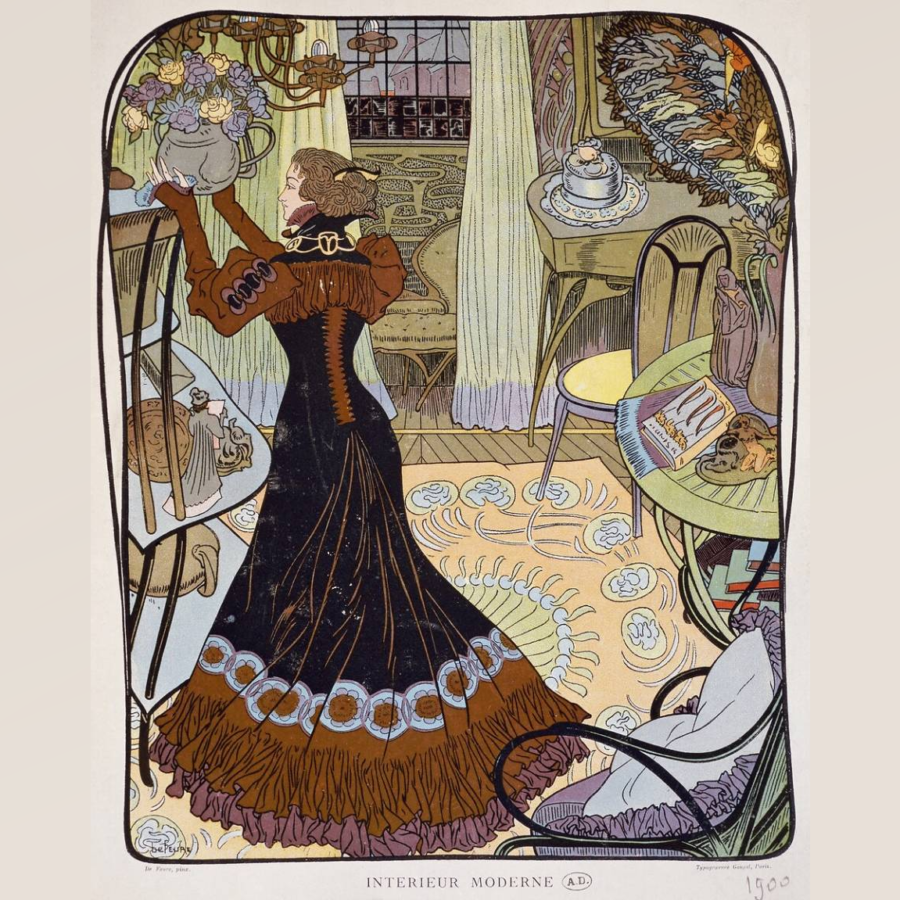
When, in 1884, French writer Rachilde described the ‘profane interior’ of a particular Paris house, she provided, perhaps knowingly, the ideal descriptor and metaphor, not only for the edifice itself, but also for the peculiar person and personality of her protagonist. Raoule, the exquisite, sadistic (anti)hero(ine) of Rachilde’s Monsieur Venus, is definable by the things she chooses to have about her. Her identity is expressed visibly, tangibly, decoratively; her accessories, her ornaments, even her lover, emerge as manifestations, perhaps symptoms, of her nature. Here, surface is evoked to figure its own kind of depth, and excess to convey considerable subtlety.
In the wake of the Arts and Crafts movement and with the evolution of Decadence and Aestheticism in the late nineteenth century, the subject of decoration was subject to some radical reassessments. From the 1860s, when the first household design manuals emerged, the middle-class homemaker was encouraged, indeed instructed, to take a passionate interest in the careful beautification of both her home and herself, offering pleasure and comfort to family and friends, as well as reassuring moral structure. But at the approach of the fin de siècle, processes of decoration, and the ways in which these processes were described, became both more fluid and more coded, with the decorous principles of household management touched by the creeping tint of fetishism.
This winter we’re staying inside to examine the subject of decoration through a selection of fin-de-siècle sources, from practical household design manuals, to politicised short stories, to classic novels, to lavishly camp novellas. Through these texts and some associated images and objects, we’ll consider the subtle interactions of surface and depth, detail and economy, beauty and ugliness, high and low culture, masculine and feminine, sacred and profane; and question in turn the extent to which (and to what ends) fin-de-siècle writing interrogates, undermines, or embellishes the sense of simple opposition or duality implied in these pairings.