WORKSHOP

EKPHRASIS, ENDLESS

Lecturer: Dominic Symes

Mondays 6–8pm, 15 June – 13 July 2026, Multipurpose Room 2, Kathleen Syme Library, Carlton, Melbourne (in-person only, recordings uploaded each week)

About 10 years ago I found myself momentarily happy, which filled me with a deep fear that my life as a poet was over. Luckily, I found writing about works of art that I liked (or didn’t like) as a sustainable way to stay creatively active without manifesting relationship tumult for the sake of poetry.

Because I think poetry is supposed to be fun and—ultimately—about being in the flow of ‘making’, I want to use the course as an opportunity to workshop ways of writing lots of poetry without thinking too hard about it. I want to lower the barrier for entry into a poem and let works of art spark ideas for poems that we might not have considered otherwise and let ekphasis (as an idea, as a metaphor, as a theory) reshape the way we relate to creative artefacts as poets.

To do this, we will look through the history of writing poems about paintings (‘ekphrasis’) and how this has reflected the art and writing of the time. We will use Gregory Pardlo’s ‘nodes’ to develop a taxonomy for different approaches to ekphrastic writing. With this foundation we will start to play, looking at poetry written in response to other creative works (tv shows, movies, albums, buildings, memes, etc.). Using Karen Sullivan’s theory of ‘conceptual blending’ we will consider what it means to write ‘after’ a creative work and how we can invite the reader into a poem. Ultimately, we will see how far we can stretch ekphrasis.

The 5-week workshop will involve close reading poems, collaboratively establishing definitions of key terms/ideas and taking frequent opportunities to free-write in response to prompts, so as to creatively implement (play with) new forms. There is no expectation that you complete any poems during the course or share any of your work. In fact, I would be happiest if you left the course feeling confused but emboldened – stupidly confident, even – with new ideas for poems that you are yet to write.

Week 1: Ekphrasis as window

  • Ode on a Grecian Urn – John Keats (1819)
  • Musée Des Beaux Arts – W. H. Auden (1940)
  • Landscape with the Fall of Icarus – William Carlos Williams (1960)
  • ‘Ode on a Grecian Urn’ from Keats’s Odes: A Lover’s Discourse – Anahid Nersessian (2022)

Week 2: Ekphrasis: a mirror

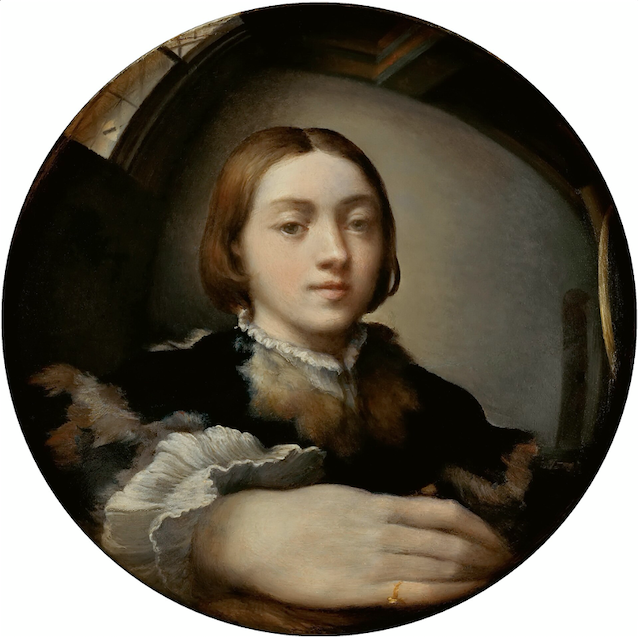
  • Self Portrait in a Convex Mirror – John Ashbery (1976)
  • ‘Ekphrasis for Writers: John Ashbery’s Self Portrait in a Convex Mirror’ from TEXT Journal – Genevieve Kaplan (2009)
  • ‘Node 5: Ekphasis and the question of perfect equilibrium’ from Callalloo – Gregory Pardlo (2012)

Week 3: Ekphrasis like a version

  • Hottest 100 of Like a Version – Triple J (2023)
  • ‘Ekphrasis as ‘event’: Poets Paint Words and the ‘performance’ of ekphrasis in Australia’ from Cordite – Dominic Symes (2017)
  • ‘The languages of art: How representational painters conceptualise their work in terms of language’ from Poetics Today – Karen Sullivan (2009)
  • ‘How to go from poetry to art’ & ‘How to go from art to poetry’ from A Handbook of Disappointed Fate – Anne Boyer (2018)

Week 4: Ekphrasis & the body

  • Dark Heart – Ken Bolton (2015)
  • ‘Shedding light for the matter’ & ’Working hot: Materialising practices’ from Materialising practices: The work of art as productive materiality – Barbara Bolt (2001)
  • Portrait of a lady on fire – Céline Sciamma (2019)

Week 5: Ekphrasis, endless

  • 101, Taipei – Nicholas Wong (2018)
  • Basic Hut Methodology – Ella O’Keefe (2013)
  • Dim Lady – Harryette Mullen (2002)
  • Keats is dead so fuck me from behind – Hera Lindsay Bird (2016)
  • Having a “Having a coke with you” with you – Mark Leidner (2021)
  • Lucky – Dorothy Porter (2008)
SEMINAR

DECORATION
‎‎

Lecturer: Angela Hesson

Tuesdays 6–8pm, 16 June – 14 July 2026, Multipurpose Room 2, Kathleen Syme Library, Carlton, Melbourne (in-person only, recordings uploaded each week)

When, in 1884, French writer Rachilde described the ‘profane interior’ of a particular Paris house, she provided, perhaps knowingly, the ideal descriptor and metaphor, not only for the edifice itself, but also for the peculiar person and personality of her protagonist. Raoule, the exquisite, sadistic (anti)hero(ine) of Rachilde’s Monsieur Venus, is definable by the things she chooses to have about her. Her identity is expressed visibly, tangibly, decoratively; her accessories, her ornaments, even her lover, emerge as manifestations, perhaps symptoms, of her nature. Here, surface is evoked to figure its own kind of depth, and excess to convey considerable subtlety.

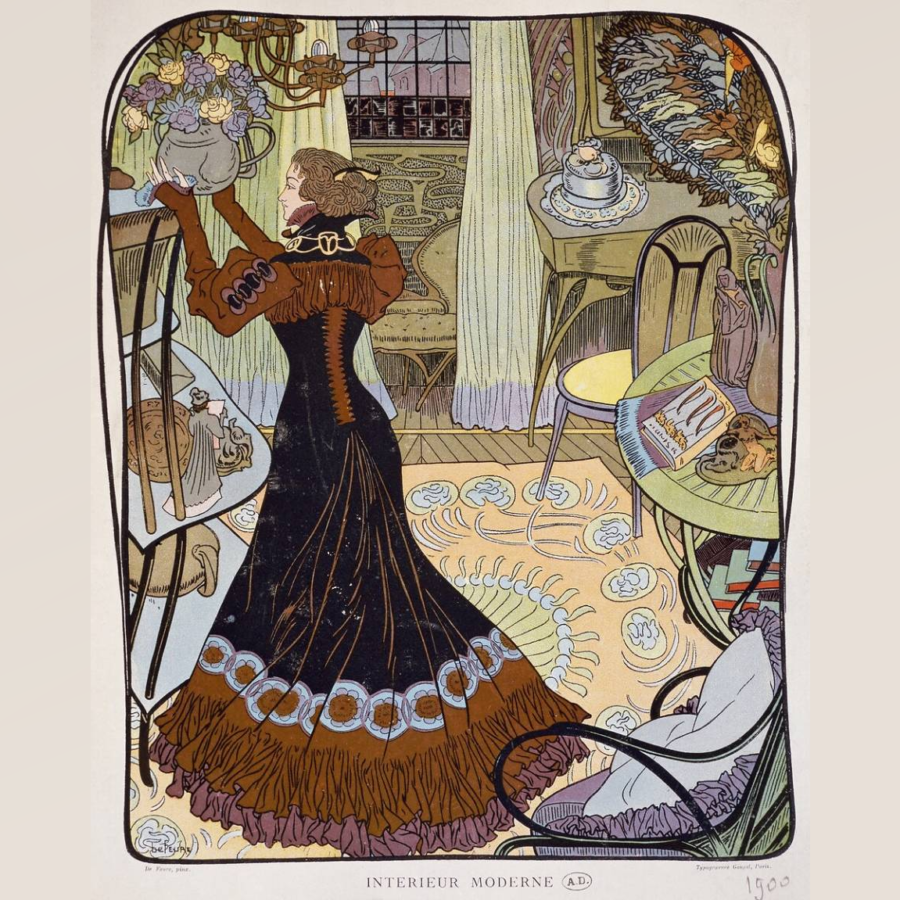
In the wake of the Arts and Crafts movement and with the evolution of Decadence and Aestheticism in the late nineteenth century, the subject of decoration was subject to some radical reassessments. From the 1860s, when the first household design manuals emerged, the middle-class homemaker was encouraged, indeed instructed, to take a passionate interest in the careful beautification of both her home and herself, offering pleasure and comfort to family and friends, as well as reassuring moral structure. But at the approach of the fin de siècle, processes of decoration, and the ways in which these processes were described, became both more fluid and more coded, with the decorous principles of household management touched by the creeping tint of fetishism.

This winter we’re staying inside to examine the subject of decoration through a selection of fin-de-siècle sources, from practical household design manuals, to politicised short stories, to classic novels, to lavishly camp novellas. Through these texts and some associated images and objects, we’ll consider the subtle interactions of surface and depth, detail and economy, beauty and ugliness, high and low culture, masculine and feminine, sacred and profane; and question in turn the extent to which (and to what ends) fin-de-siècle writing interrogates, undermines, or embellishes the sense of simple opposition or duality implied in these pairings.

1. ‘Pleasures of anticipation and possession’

We open with some key treatises of nineteenth-century household design writing. Their publication coincided with numerous broader social reassessments of humans’ place in the natural world, and of established ideas about class, nation, gender and sexuality. Anchored within the home, these texts sought ostensibly to offer comfort, pleasure and stability and within the wider turbulence. But is this all as simple and safe as it seems, and whose side are their authors really on?

Core reading: Mary Eliza Haweis, extracts from The Art of Decoration (1889)

https://archive.org/details/artofdecoration00hawerich/mode/2up

Lucy Orrinsmith, extracts from The Drawing Room (1878)

https://archive.org/details/drawingroomitsde00orriuoft/drawingroomitsde00orriuoft/mode/2up

Oscar Wilde, House Decoration (1882)

https://archive.org/details/artdecoration00wild/mode/2up

Additional/optional reading to be provided in Week 1

2. ‘The profane interior’

First published in Belgium in the same year as J.K. Huysmans’ A Rebours, and immediately prosecuted for obscenity, Rachilde’s Monsieur Venus exists as a lavishly decorative alternative manifesto of Decadence, notably devoid of Huysmans’ concluding concessions to propriety.

Core reading: Rachilde, Monsieur Venus (1884)

(Various translations available free online. Melanie Hawthorne’s 2004 edition, Monsieur Vénus: A Materialist Novel restores the text to its full uncensored original form)

Additional/optional reading to be provided in Week 2

3. ‘Up and down and sideways they crawl’

This week sees domestic confinement taken to its logical conclusion with Charlotte Perkins Gilman’s The Yellow Wallpaper. We’ll also examine the intersections of domestic design and the emergent transatlantic women’s rights movements through extracts from Gilman’s later writings and those of suffragette design duo, Rhoda and Agnes Garrett.

Core reading: Charlotte Perkins Gilman, The Yellow Wallpaper (1892)

Additional/optional reading: Charlotte Perkins Gilman, extracts from The Home: Its Work and Influence (1903);Rhoda and Agnes Garrett, extracts from Suggestions for house decoration (1878)

4. ‘A story of cabinets and chairs and tables’

James’s 1897 novella takes on the impacts of primogeniture via the struggles of soon-to-be-ousted aesthete, Adela Gereth, as she conspires with – and sometimes against – her protégé, Fleda Vetch, to preserve her great house and the life’s work contained within it.

Core reading: Henry James, The Spoils of Poynton (1897)

Additional/optional reading to be provided in Week 4

5. ‘A miracle of violet glass’

For the final session we’re pulling out all the decorative stops, in style and in subject, with Ronald Firbank’s Vainglory. Authored in the sober early years of WW1 and in defiance of dominant currents of ‘muscular Christianity’, Firbank’s elaborate neo-rococo confection follows the unswerving Mrs. Shamefoot as she endeavours to have herself memorialised in stained glass.

Core reading: Ronald Firbank, Vainglory (1915)

https://archive.org/details/vainglory0000rona_w7q0/mode/2up

Additional/optional reading: Brigid Brophy, extracts from Prancing Novelist, 1973